Wednesday, 14 April 2010

The Woman who died of Robespierre

A few days of enforced inactivity, spent in my sitting-room-cum-study, led me to browse the shelves of a book-case filled with books which just happen to have arrived there in a recent attempt to re-organise/rationalise books from various part of the house. Some are books which have been read and even re-read, some I keep by me for purely sentimental reasons or because I refer to them from time to time, some are unfamiliar. A few days ago my eye fell on this one:

A Life of Solitude
Stanislawa Przybyszewska
A Biographical Study with Selected Letters
by Jadwig Kousack and Daniel Gerould

Please don't ask me how 'Przybyszewska' is pronounced - I have no idea! But the life-story of this gifted Polish writer is as fascinating as it is appalling. What's more, learning about her passion, amounting to an obsession, with Robespierre led me to some internet explorations and information about the French Revolution, of which my knowledge is extremely, and shamefully, meagre.
Przbyszewska's obsession with Robespierre, Danton and the French Revolution in general took root at a young age. Hilary Mantel, writing in the London Review of Books (Vol.22 No. 7 20th March 2000), says this of her:
[Stanislawa] was the maddest of all female Robespierrists (and in this matter I yield to few.) Born in 1901, daughter of a Polish writer, she was a writer of starvation and frost and died aged 34 in Danzig, where she had been living in a sort of out-house, unheated through the winter, painting her food with lysol to preserve it while thinking intensively and extensively about 'this handsome, petty lawyer, who at the age of 35 single-handedly ruled France.' Tuberculosis, morphine and starvation were adduced as the reasons for her death but she could more truthfully be diagnosed as the woman who died of Robespierre.
A major factor in, and influence on Przybyszewska's life, and largely a malign influence at that, was her father, Stanislaw Przybyszewski, a self-styled Satanist and serial philanderer. The brief Wikipaedia entry for him makes no mention of Stanislawa, whose work, ironically, has achieved a postumous recognition which his appears not to have done, despite the fact that in his life-time he was a famous figure in Polish literature and cultural life. It was her father who introduced Stanislawa to morphine, thus precipitating the addiction which was to be a contributory factor in her mental instability and a life of hardship and poverty.
At his death, the father was accorded the elaborate civic rites due to such a celebrated figure. His daughter received a pauper's funeral attended by three people.

Stanislawa Przybyszewska's most enduring work is the trilogy of plays she wrote about the French Revolution, the best known being The Danton Case, on which Andrzej Wajda's 1983 film, Danton was based.

Saturday, 13 March 2010

One Star in the West

To have got so far, alone
Almost to the seventieth stone
Is a wonder.
There was thunder

A few miles back, a storm-shaken
Hill and sea, the bridge broken
[The bright fluent burn
A bruised torrent]

But all cleared
Larks were singing
Again, the April rain ringing
Across the sewn hills,
Among the daffodils


The road winds uphill, but
A wonder will be to sit
On the stone at last -
One star in the west.

George Mackay Brown (1921 - 1996)

Sunday, 30 November 2008

The Brocken Spectre 2, or A Poem for Billo, who is still away


Against Biography
by William Bronk

We came to where the trees, if there were trees,
say, a little group of them, or a house
maybe, something there, whatever it was,
a man standing, someone, it would be clear
enough, sharp at the edges but everything else
was blurred, all running together or else
moving - sideways, back and forth- or the scale
was wrong, some of the things close by
were smaller than those set further back, so that though
we saw something, and saw it plain enough
we saw it nowhere, there wasn't any place
for it to be, or any place for us.
We wandered. Not quite aimless. Man here, though,
would live without biography: it needs
a time and place: there isn't any: who
could say, not smiling, me and my world
or so and so and his time, and stage a play
clothed properly in front of sets,
and believe that this made time and place of the world?

No, we have come too far for that belief
and saw ourselves as ghost against the real,
and time and place as ghosts; there is the real.
It is there. Where we are: nowhere. It is there.

The Brocken Spectre


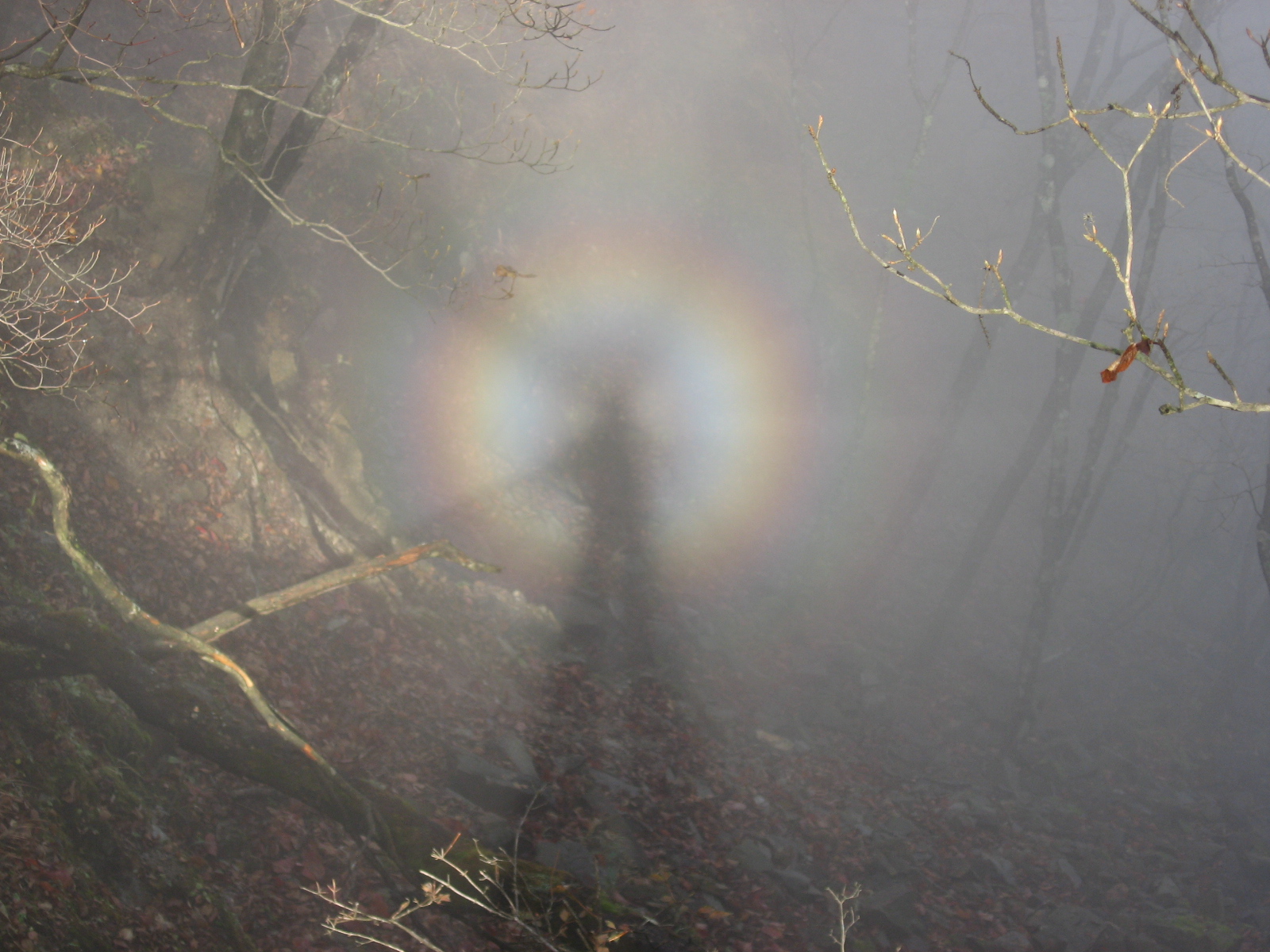
Frost at dawn, as I walked back early over the high fields with the dogs. To the west, deep banks of fog lay darkly over the sea, mist drifting along the Sea Brows, veiling the pines. To the east, the sun rose over the Skiddaw fells. Then I saw myself! A huge shadow on the sea. I waved the dogs' stick, and bright splinters of light spilled out from the moving shadow.
I've never witnessed this phenomenon before. This is the Wikipaedia account:
A Brocken spectre (German Brockengespenst), also called Brocken bow or mountain spectre is the apparently enormously magnified shadow of an observer, cast upon the upper surfaces of clouds opposite the sun. The phenomenon can appear on any misty mountainside or cloud bank, or even from an aeroplane, but the frequent fogs and low-altitude accessibility of the Brocken, a peak in the Harz Mountains in Germany, have created a local legend from which the phenomenon draws its name. The Brocken spectre was observed and described by Johann Silberschlag in 1780, and has since been recorded often in literature about the region.

Monday, 3 November 2008

Seven Years in Tibet (revisited)

I’ve just been re-reading this book, which I read for the first time last year. It still made a profound impression on me and I felt curious to find out more about Heinrich Herrer. As he didn't die until 2006, aged, I think, 93, there are obituaries and also plenty of biographical material about him on the Internet.


The publication of the book, in fact, brought him much acclaim both as a travel writer and mountaineer but also prompted people to investigate his past. As a very young man he had been a member of the SS but always averred that it was only because he was thereby offered the chance to become a ski instructor and trainer and that he had no political or ideological commitment to the organistation or the Nazi party.


All this has been well chewed over, especially by anti-Nazi propagandists who can get extremely worked up about people of Herrer's background. Added to that, he became a close friend of the Dalai Lama during his time in Tibet, a friendship which continued and was cemented suring the latter's exile. The fact that the Dalai Lama apparently had friends and supporters among ex-Nazis added fuel to the fire although some might think that the Dalai Lama would welcome friends of any persuasion. In the end I felt that the question of Herrer's past and suspected political leanings didn't detract from the achievement which the book represents.

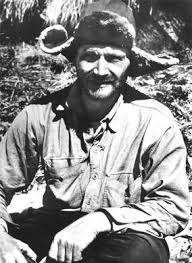
When I'd finished the book, I began to think more about Peter Aufschnaiter, who is something of a shadowy figure in Herrer's narrative. (He's shown in the accompanying photo, taken while he was serving in the War.) He was Herrer's co-escapee from Derha Dun prison and his companion over the years of their escape and travels through Tibet to reach Lhasa. Resorting to the Internet again (of course), I found quite a bit of material about him. He was a very different character, more solitary and completely immersed in his work and his passionate calling as an explorer and mountaineer. For much of the time that he and Herrer were in Tibet together, Aufschnaiter lived outside Lhasa, working on various engineering projects for the government.

In 1951, Herrer left Lhasa and went straight to Nepal, whereas Aufschnaiter continued to travel around Tibet, exploring and mapping previously unknown areas and climbing. During this time he lived with local people in all the areas he visited, including with some nomadic tribes, thereby gaining a unique insight into their lives and customs. He left Tibet the following year, due to the Communist take-over, but only returned to Europe after twenty years absence.

Herrer achieved fame and recognition because of the publication of Seven Years in Tibet, in 1953, whereas Aufschnaiter published only some papers and articles during his life-time. On his death in the 70s, his friend Martin Brauen, of the Ethnological Museum, University of Zurich, compiled, collated and edited the voluminous notes and journals, and, importantly, photographs, which Aufschnaiter kept during his travels. These were published in 2002, by a small Bangkok publishing house specialising in Asian titles, under the title Peter Aufschnaiter's Eight Years in Tibet and I was able to buy it on-line.

This book is NOT the travel classic which Herrer's book is. But it IS a unique and gripping picture of life and times in Lhasa and the rest of Tibet before the Chinese invasion. It also reveals Aufschnaiter as a dedicated and passionate explorer and climber, and a meticulous recorder of all his observations and map-makings. There's a lot of technical detail about the mountains and general terrain, which can become a bit tedious for the non-explorer/mountaineer, but it's also full of fascinating observation of the people and life-styles he encounters in his travels. It's illustrated throughout by Aufschnaiter's wonderful photographs. The style and editing are rather choppy but I enjoyed it nonetheless and felt it enhanced and enlarged upon my reading of the Herrer account.

Saturday, 11 October 2008

The Priory Garden

Work in progress. David, the Man With The Pick-Axe, has cleared this south-facing border of nettles, brambles, rogue buddleias and much else. Jeanne and I have dug it out and, since this shot was taken, have spread around and dug in large quantities of donkey poo.

Sam has been ever-present, checking on progress but constantly interrupting labour by attempting to beguile us into chucking his ball around. Bren has been nothing but a pain: digging a hole in the lawn and chewing up his football so that it had to be taken away and hidden high up in the laburnum tree, which was good, as trying to climb up the tree kept him fully occupied for hours.

Wednesday, 30 April 2008

Savage Messiah by H.S.Ede

‘When I face the beauty of nature, I am no longer sensitive to art, but in the town I appreciate its myriad benefits—the more I go into the woods and the fields the more distrustful I become of art and wish all civilization to the devil; the more I wander about amidst filth and sweat the better I understand art and love it; the desire for it becomes my crying need.’ Henri Gaudier-Brzeska

J.S.Ede’s book is based largely on Henri’s letters, mainly those to Sophie Brzeska but including some to family and friends, which Ede obtained from Sophie’s estate after her death in 1925. Henri and Sophie’s intense and complex relationship, begun when he was eighteen and she over twice his age, must surely rank as one of the most interesting and enigmatic in the annals of human relationships. Their symbiotic interdependence was so complete that he ‘annexed’ her name to his own and thereafter was known as Henri Gaudier-Brzeska. In their relationship, ostensibly platonic, the roles of mother-and-child/brother-and sister/loving friends were played out endlessly, yet expressed, always, in the most passionately loving terms.

Henri’s letters detail his everyday concerns and activities, intimately interwoven with his work and artistic development. He and Sophie lived together and supported each other through periods of the direst poverty and deprivation. When they were apart, most often because of illness or, in Sophie’s case, the need to earn money, for example as a governess, they constantly exchanged letters although Sophie’s to Henri seem not to have survived.

Henri was killed in the trenches at the start of the First World War. Sophie never recovered from this loss and died in an asylum in 1925.

I haven’t seen Ken Russell’s 1972 film based on Ede’s book.
The picture is of a work by Henri: Ornamental Mask. Painted bronze. 1910.