Friday, 3 September 2010

The Spirit of Geometry

Burkhardt: '....the two poles of all artistic expression in Islam: the sense of rhythm and the spirit of geometry. ...'

This wall-quilt is my way of expressing this in the medium in which I most often work. As for how it is created, let's just say that it's not a technique for the faint-hearted!


Tuesday, 27 July 2010

View from the Grand Tier boxes!

I'd managed to get two returned tickets as the Hall had been completely booked almost as soon as the concert was advertised. And we were lucky - got two seats bang opposite centre of the stage.

Posted by Picasa

Alice does the Royal Albert Hall

The Dr. Who concert was brilliant.

Posted by Picasa

Wednesday, 14 April 2010

The Woman who died of Robespierre

A few days of enforced inactivity, spent in my sitting-room-cum-study, led me to browse the shelves of a book-case filled with books which just happen to have arrived there in a recent attempt to re-organise/rationalise books from various part of the house. Some are books which have been read and even re-read, some I keep by me for purely sentimental reasons or because I refer to them from time to time, some are unfamiliar. A few days ago my eye fell on this one:

A Life of Solitude
Stanislawa Przybyszewska
A Biographical Study with Selected Letters
by Jadwig Kousack and Daniel Gerould

Please don't ask me how 'Przybyszewska' is pronounced - I have no idea! But the life-story of this gifted Polish writer is as fascinating as it is appalling. What's more, learning about her passion, amounting to an obsession, with Robespierre led me to some internet explorations and information about the French Revolution, of which my knowledge is extremely, and shamefully, meagre.
Przbyszewska's obsession with Robespierre, Danton and the French Revolution in general took root at a young age. Hilary Mantel, writing in the London Review of Books (Vol.22 No. 7 20th March 2000), says this of her:
[Stanislawa] was the maddest of all female Robespierrists (and in this matter I yield to few.) Born in 1901, daughter of a Polish writer, she was a writer of starvation and frost and died aged 34 in Danzig, where she had been living in a sort of out-house, unheated through the winter, painting her food with lysol to preserve it while thinking intensively and extensively about 'this handsome, petty lawyer, who at the age of 35 single-handedly ruled France.' Tuberculosis, morphine and starvation were adduced as the reasons for her death but she could more truthfully be diagnosed as the woman who died of Robespierre.
A major factor in, and influence on Przybyszewska's life, and largely a malign influence at that, was her father, Stanislaw Przybyszewski, a self-styled Satanist and serial philanderer. The brief Wikipaedia entry for him makes no mention of Stanislawa, whose work, ironically, has achieved a postumous recognition which his appears not to have done, despite the fact that in his life-time he was a famous figure in Polish literature and cultural life. It was her father who introduced Stanislawa to morphine, thus precipitating the addiction which was to be a contributory factor in her mental instability and a life of hardship and poverty.
At his death, the father was accorded the elaborate civic rites due to such a celebrated figure. His daughter received a pauper's funeral attended by three people.

Stanislawa Przybyszewska's most enduring work is the trilogy of plays she wrote about the French Revolution, the best known being The Danton Case, on which Andrzej Wajda's 1983 film, Danton was based.

Saturday, 13 March 2010

One Star in the West

To have got so far, alone
Almost to the seventieth stone
Is a wonder.
There was thunder

A few miles back, a storm-shaken
Hill and sea, the bridge broken
[The bright fluent burn
A bruised torrent]

But all cleared
Larks were singing
Again, the April rain ringing
Across the sewn hills,
Among the daffodils


The road winds uphill, but
A wonder will be to sit
On the stone at last -
One star in the west.

George Mackay Brown (1921 - 1996)

Sunday, 30 November 2008

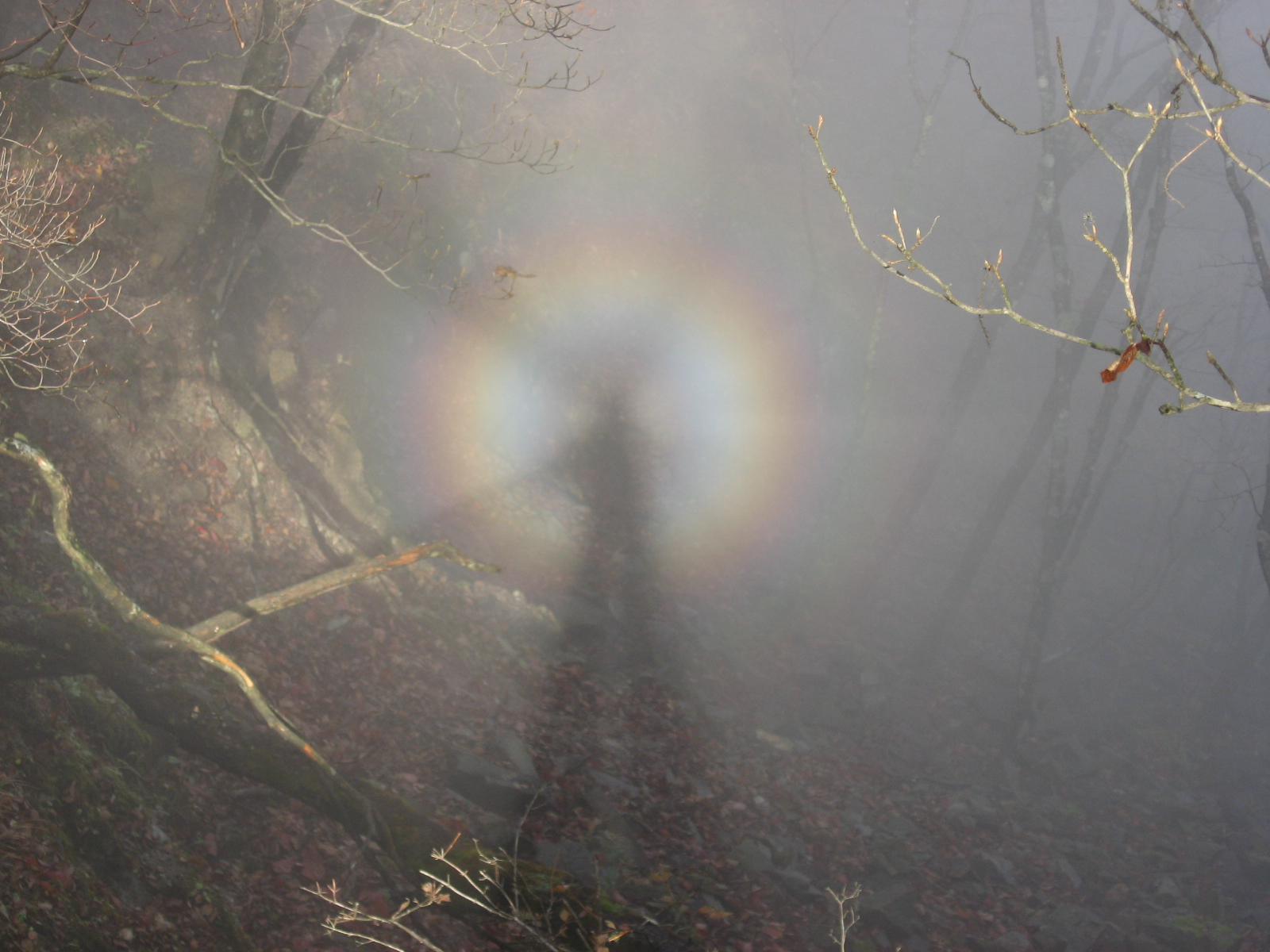
The Brocken Spectre 2, or A Poem for Billo, who is still away


Against Biography
by William Bronk

We came to where the trees, if there were trees,
say, a little group of them, or a house
maybe, something there, whatever it was,
a man standing, someone, it would be clear
enough, sharp at the edges but everything else
was blurred, all running together or else
moving - sideways, back and forth- or the scale
was wrong, some of the things close by
were smaller than those set further back, so that though
we saw something, and saw it plain enough
we saw it nowhere, there wasn't any place
for it to be, or any place for us.
We wandered. Not quite aimless. Man here, though,
would live without biography: it needs
a time and place: there isn't any: who
could say, not smiling, me and my world
or so and so and his time, and stage a play
clothed properly in front of sets,
and believe that this made time and place of the world?

No, we have come too far for that belief
and saw ourselves as ghost against the real,
and time and place as ghosts; there is the real.
It is there. Where we are: nowhere. It is there.

The Brocken Spectre


Frost at dawn, as I walked back early over the high fields with the dogs. To the west, deep banks of fog lay darkly over the sea, mist drifting along the Sea Brows, veiling the pines. To the east, the sun rose over the Skiddaw fells. Then I saw myself! A huge shadow on the sea. I waved the dogs' stick, and bright splinters of light spilled out from the moving shadow.
I've never witnessed this phenomenon before. This is the Wikipaedia account:
A Brocken spectre (German Brockengespenst), also called Brocken bow or mountain spectre is the apparently enormously magnified shadow of an observer, cast upon the upper surfaces of clouds opposite the sun. The phenomenon can appear on any misty mountainside or cloud bank, or even from an aeroplane, but the frequent fogs and low-altitude accessibility of the Brocken, a peak in the Harz Mountains in Germany, have created a local legend from which the phenomenon draws its name. The Brocken spectre was observed and described by Johann Silberschlag in 1780, and has since been recorded often in literature about the region.